


I have no idea what the statistics would be, but in the early days of helical technology, helicals were frequently specified as an alternative when conventional foundations or tiebacks were difficult, if not impossible, to install. With success, acceptance grew and the designation of helicals as problem-solving foundation technology expanded.
Helical Pile World stories, articles, and papers all attest to the versatility, problem solving, and issue-mitigating virtues of helical piles. Recently, a new Danbro installer was challenged by a restrictive local ordinance to advance a project and meet a deadline.
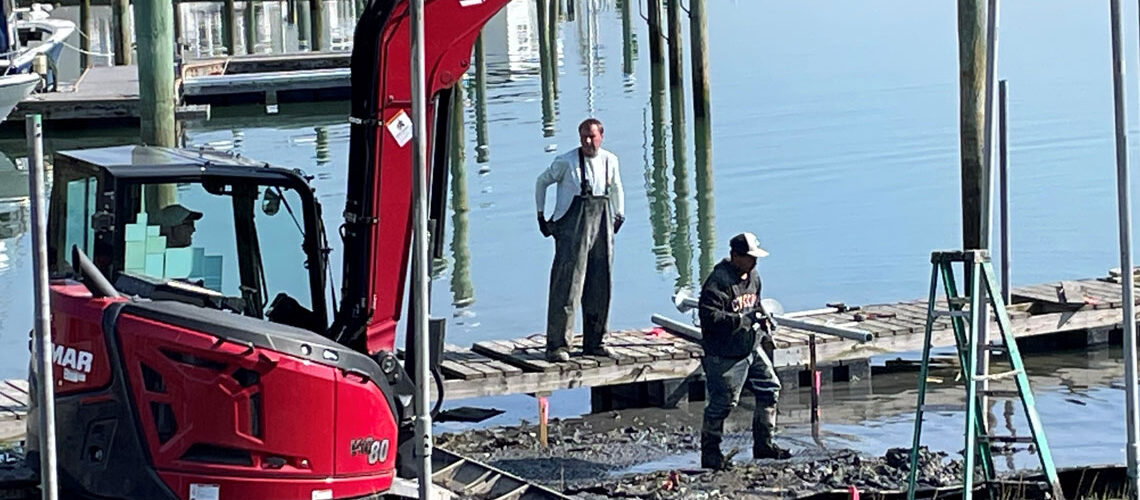
The job was a foundation for a new home in a harbor with low blow-count material requiring a deep foundation. Harold Arenberg, Inc., the installer, would normally drive timber in this situation. However, the project was running up against a deadline imposed by a local government ordinance. Other installers have worked in Cape May, NJ and have experienced this local ordinance that prohibits the driving of timber piles from Memorial Day through Labor Day.
Madison & New York | Danbro Distributors
Helicals, of course, are a frequent “go-to” when environmental restrictions limit contractors’ options. A newly installed walkway through sensitive wetlands in West Cape May was a recent dramatic example where extreme restrictions on methods, materials, and the installer were imposed. This extreme installation method was referred to as “fly over construction” to reflect the minimal impact of the project.
South Cape May Meadows | Danbro Distributors
The restrictions on Arenberg’s project were not quite as severe, but the local ordinance was just as real as an impediment. Keith Arenberg has been using square shaft helical tiebacks for bulkheads, but only recently began using pipe piles for residential projects. Permitting and other issues slowed up the start of the project and Arenberg was up against the timber pile deadline. He priced out the helical option against the mobilization cost of timber. He would need two cranes for timber piles: one working from a barge and the other working on land. Timber piles would require scaffolding for notching the piles. Alternatively, the helicals would require working from marsh mats from low to mid tide. The helical option saved some money, but, more importantly, gave Arenberg the luxury of working into June, if need be. The finished elevation left the helicals 12’ above grade, so the exposed pipe would be encased in fiberglass and grouted.
A similar deadline issue and neighborly considerations prompted a developer of a Cape May housing complex to take a similar route and use helicals to keep working through the summer months.
Cape May Cove – Pittsburgh & Missouri | Danbro Distributors
This project was Keith Arenberg’s second using helicals for residential foundations in marine environments. A quick study, he learned from his experience on the Cutler residence the flexibility that helicals can provide when time, money, and installation options are limited.



No comments yet.